Fleet Management partners with the Maritime Anti‑Corruption Network (MACN) to deliver tailored training that equips teams with practical awareness to address corruption risks in everyday maritime operations.
Is corruption simply a compliance issue, or does it pose a deeper risk to safety, trust, and the smooth flow of global trade?
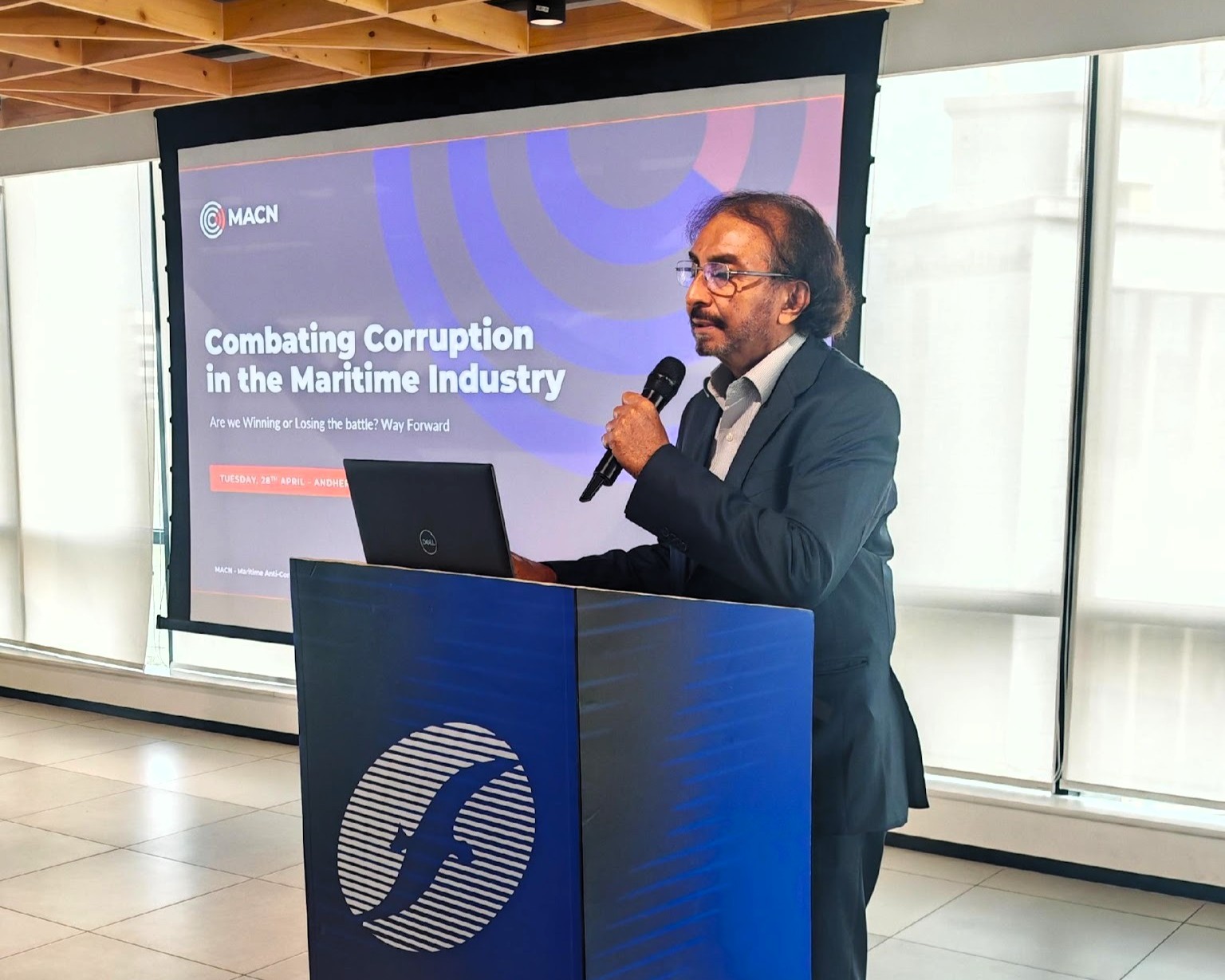
This question framed a recent training session delivered in partnership with the Maritime Anti-Corruption Network (MACN), aimed at strengthening practical awareness of corruption risks across Fleet Management’s onshore and onboard teams.
The session was held at Fleet Management’s Andheri office in Mumbai on Tuesday, 28 April, with more than 80 employees and seafarers participating both in person and online. Colleagues joined from across India and regional offices, reinforcing the shared nature of ethical responsibility throughout Fleet’s operations.
The training formed part of Fleet Management’s ongoing commitment to embed ethical decision-making into everyday work, and to equip both shore-based and seagoing professionals with the confidence and practical tools to respond appropriately to real-world corruption risks. The training also aligns with the Navigating Responsibly pillar of our Encompass sustainability strategy, through which we aim to ensure the upholding of ethical business practices, across the business.
Understanding Corruption as an Operational Risk
The session was led by Shri Deepak Shetty, I.R.S. (Retd.), former Secretary to the Government of India & Director General of Shipping and Current Senior Adviser (India) to the MACN (Maritime Anti-Corruption Network), Mumbai.
Drawing on extensive regulatory and operational experience, Mr Shetty outlined MACN’s role as a global, industry-led initiative established in 2011 to reduce corruption in the maritime sector through collective action.
He emphasised that corruption should not be viewed solely as a compliance issue, but as a systemic operational risk. One that can directly affect vessel safety, crew welfare, operational continuity, and the credibility of international trade.
Using real, resolved case examples from Indian ports, Mr Shetty demonstrated how MACN’s confidential reporting tools, including Port Alert Notifications (PANs), help seafarers and companies escalate incidents safely. These mechanisms enable data-driven engagement with port authorities and other stakeholders, often resolving issues without exposing individuals or organisations to retaliation.
A key message from the session was that transparency, consistency, and collective action are far more effective than isolated individual responses.
Reinforcing Fleet’s Ethical Commitments
These principles align closely with Fleet Management's zero-tolerance approach to bribery and corruption. Fleet is committed to acting professionally, fairly, and with integrity in all business dealings and relationships, supported by robust internal policies and systems designed to prevent, detect, and address corruption risks.
Our commitment is non-negotiable through the Navigating Responsibly pillar; we aim to train all eligible employees on the Company’s Code of Conduct while targeting anti-corruption training to all eligible employees, bi-annually.
These standards apply equally across onshore and onboard roles, reinforcing shared accountability and a common ethical foundation throughout Fleet’s global operations.
Supporting People to Act with Confidence
Training sessions like this play an important role in helping colleagues recognise the real impact of corruption, from lost operational time and financial exposure to added pressure on seafarers and shore teams.
By strengthening awareness of best practices and clear reporting pathways, the programme helps employees respond with confidence, raise concerns responsibly, and make decisions aligned with Fleet’s values.
The session concluded with an open Q&A, covering practical scenarios across private, public, and public-private partnership ports, and reemphasised the value of clear and consistent guidance from Fleet’s Fleet Personnel Department when dealing with corruption related challenges at ports.
Fleet Management thanks Shri Deepak Shetty, Capt Viraf Chichgar, Capt Sameer Phadke, and the organising team for delivering a thought-provoking session and continually raising the standards of ethical codes of conduct, transparency, and integrity across the maritime value chain.


.jpg)

.svg)