Valsad, Gujarat, India: Earlier this month, Fleet Management hosted its first seafarer seminar of the year, focused exclusively on Ratings.
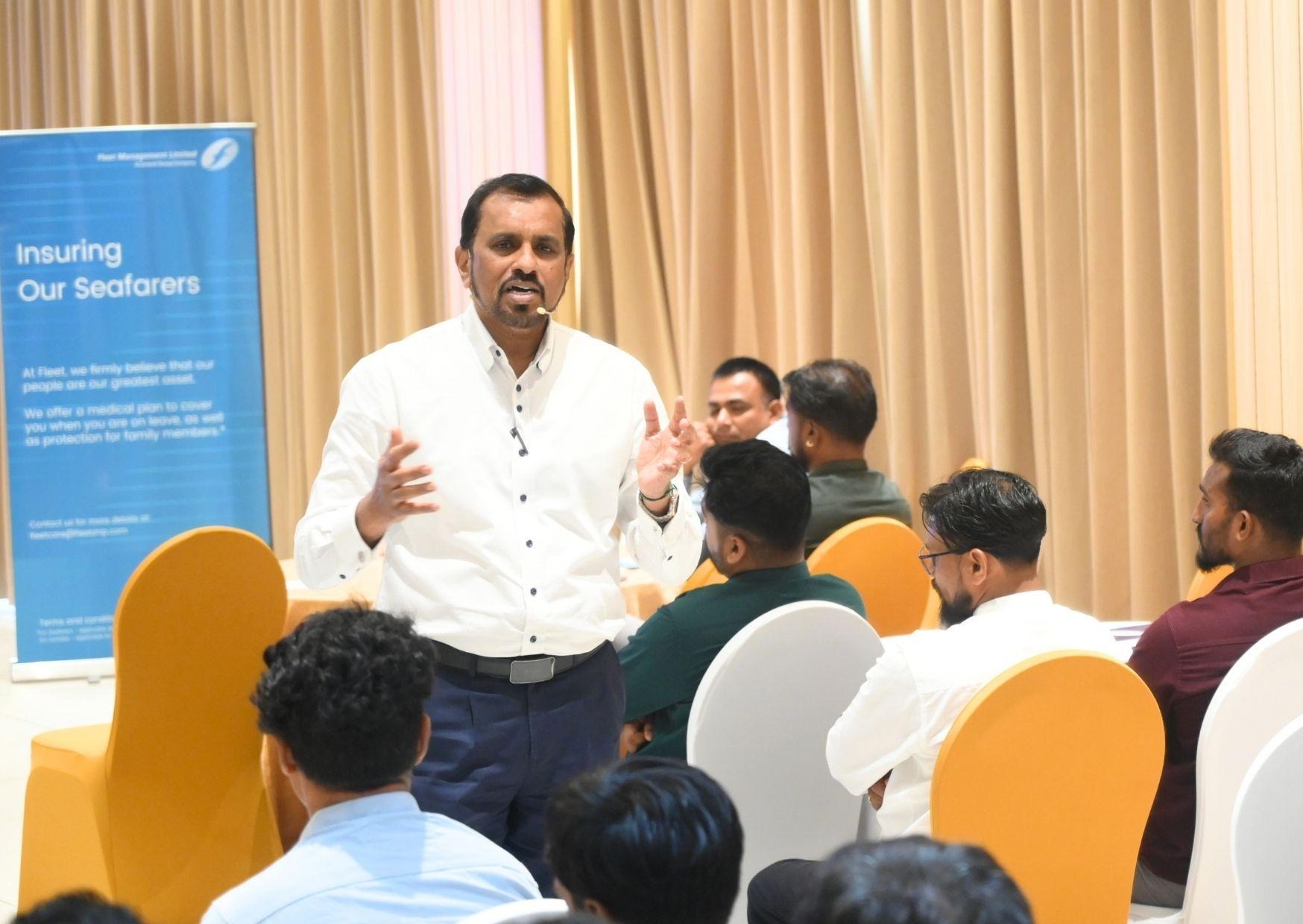
Attended by over 200 professionals, the interactive seminar featured deep-dive sessions on welfare and wellbeing, safety principles in action, and operational excellence. Fleet Management’s Chief Executive Officer, Capt. Rajalingam Subramaniam, also attended the day-long event and led the penultimate session.
These topics were carefully selected to reinforce Fleet Management’s core safety principles while ensuring they remain relevant to everyday onboard operations. By drawing on real operational incidents, the sessions used a case study approach to bring practical context to key challenges faced at sea, helping Ratings better understand how their day-to-day actions contribute to safer and more consistent performance.
The seminar also provided leadership with an opportunity to engage directly with a seafarer group that plays a critical role in onboard operations, reinforcing a unified understanding of company standards and vision across the fleet.
Customer Centricity at the Core of Our Operations
According to a 2025 study by Rightship, 12,540 days were lost in 2024 due to PSC detentions which cost the industry $188million. Additionally, the emotional cost of injuries, followed by the possible loss of income for the seafarer and his family are concerning.
Gaps in crew wellbeing, safety discipline, communication and operational responsiveness can directly affect vessel performance, reduce reliability and weaken trust with clients and shipowners. Inconsistent adherence to procedures, unresolved welfare concerns and limited safety ownership may increase operational risk and compromise the incident-free standards customers expect.
Through open discussions, practical learning and direct engagement with shipboard personnel, the seminar helped share best practices, strengthen accountability and align onboard behaviours with customer expectations. This supports safer operations, improved service consistency and long-term client satisfaction.
Reinforcing Mindset, One Case-Study at a Time
Capt. Deepak Correa, Chief Operating Officer for Fleet Management’s India operations, opened the seminar with a leadership address that set the tone for the day.
“Safe operations are built on everyday decisions. When people understand the reason behind them, they make better choices,”
he said.
The case study approach strengthened practical decision-making by linking real incidents to daily onboard behaviour. It also encouraged better communication between Ratings, officers and shore teams, helping identify operational gaps earlier. Most importantly, it reinforced accountability and procedural discipline, directly supporting safer operations, stronger customer confidence and long-term client retention.
A central part of the programme focused on wellbeing and its role in operational decision-making. In a session led by Capt. Randhir Mahadik, Head of Fleet Care, alongside psychologist Divya Nair, attendees explored practical ways to recognise stress, support colleagues and respond early before situations escalate.
The focus remained on practical actions. Ms Nair highlighted signs of distress among seafarers and how crews can support one another. Simple steps such as checking in with a colleague, speaking up or recognising when someone needs support contribute to safer and more stable onboard environments. When crews feel supported, they are better able to maintain focus, manage pressure and make sound decisions at sea.
Connecting Daily Work to Customer Expectations
In a session led by Dipankar Mukutmoni from the Technical Management team, participants discussed how day-to-day work onboard connects to customer expectations.
These conversations reinforced a shared understanding that how tasks are carried out directly shapes vessel performance over time. Clear communication, teamwork and consistency build trust with shipowners and support reliable operations.
Keeping Safety Practical and Real
Safety sessions focused on real examples drawn from onboard operations, including mooring, cargo handling, anchoring and reporting practices. Led by Satish Sharma, Capt. Krishna Bharathan and Capt. Prajyot Sinha, these discussions encouraged participants to speak openly about challenges faced in daily work.
Rather than focusing only on outcomes, the sessions explored how incidents develop. Participants examined how communication gaps, rushed decisions or small deviations from procedures can escalate into larger risks. Working through these situations together helped crews understand where early action can prevent issues from developing.
Throughout the seminar, the emphasis remained on shared responsibility. Safety depends not only on procedures but also on everyday actions and the confidence to speak up when something is not right.
Straight From the Heart
Capt. Raja led the final session, describing the Ratings as among the very best and recognising the exceptional talent within the group. He acknowledged past incidents as deviations from established company standards while emphasising the importance of tools such as stop-work authority.
He highlighted the need for strong collaboration between shore-based and onboard teams and reiterated the organisation’s commitment to achieving zero harm. He concluded by reaffirming a core company belief that seafarers are the organisation’s greatest asset.
The session closed with an engaging discussion, covering topics such as rest hours enforcement, application of toolbox feedback across all ranks and other operational concerns.
A Night to Remember
The event concluded with over 20 of Fleet Management’s longest-serving Ratings receiving long service awards.
By encouraging stronger collaboration between ship and shore teams and placing Ratings and officers at the centre of operational discussions, the seminar reinforced a culture of ownership, professionalism and continuous improvement. Fleet Management looks forward to hosting more such engagements to support safe, reliable and customer-focused operations across its global fleet.
Safer Teams, Safer Operations
Seminars across ranks form an important part of Fleet Management’s approach to continuous improvement. Clear communication helps identify risks earlier, while supported crews make more consistent decisions.
When seafarers are well prepared and supported, they perform with confidence. This enables vessels to operate safely and reliably under the guidance of empowered teams.



.svg)