As 2025 draws to a close, Capt. Raja Subramaniam, CEO of Fleet Management, reflects on the transformative shifts shaping the maritime industry. Last year, Fleet Management has placed a sharp focus on three imperatives: investing in human capital, accelerating decarbonisation, and fostering collaboration, cornerstones for navigating an increasingly complex global landscape.

Developing a Future-Ready Maritime Workforce
The escalating global officer shortage, projected to reach 10% by 2030, presents both a challenge and a significant opportunity for leading maritime nations. Asia, including India, Philippines, and China, as prime regions to drive human capital growth.
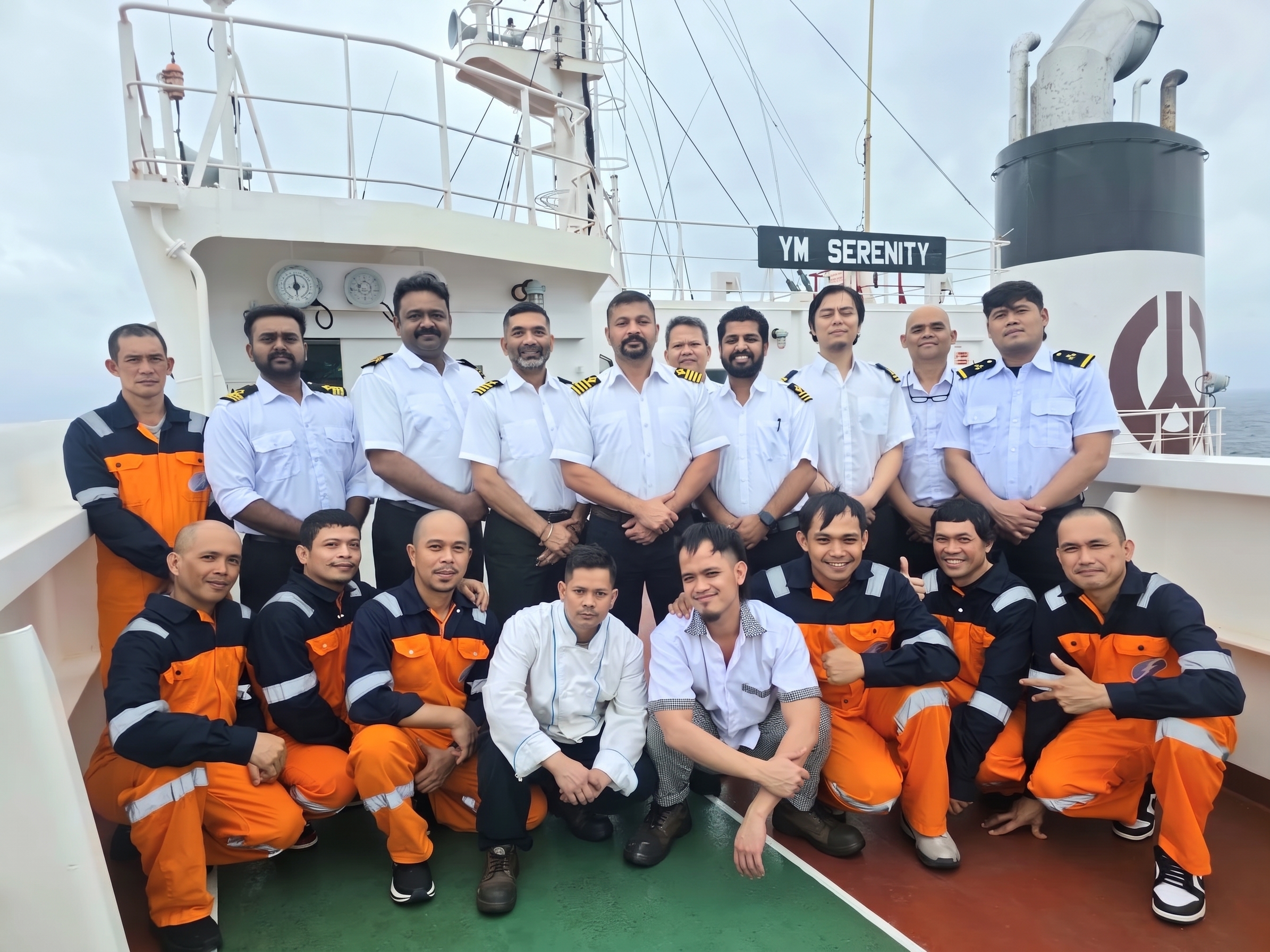
Fleet Management actively supports this ambition, currently employing over 20,000 seafarers from India, 4,000 from Philippines and 3,000 from China, a number targeted for further expansion. This growth is underpinned by continuous investment in training at the Fleet Management Training Institute (FMTI) and the International Maritime Institute (IMI), which was acquired by The Caravel Group earlier this year.
“Our strategy is focused on growing numbers, and investing in training and expertise, especially in areas such as green fuels where we need specialised mariners to support the energy transition. “
Fleet Management's commitment to seafarer development extends across its global network. Recent investments include a new, state-of-the-art training facility in Manila, designed to prepare seafarers for increasingly complex operational environments and emerging technologies. Similar efforts to deepen partnerships with local training institutions in Dalian and other key regions are ensuring a highly skilled workforce ready for the future.
Navigating Geopolitical Headwinds and Building Supply Chain Resilience
Acknowledging the reshaping effects of geopolitical tensions and trade disputes on traditional alliances and global supply chains, Capt. Raja affirmed the shipping industry's inherent resilience. He posited that these dynamics encourage stakeholders to explore diversified and more robust trade routes.
For example, India is also collaborating with the international industry through vessel reflagging, port infrastructure investments, as well as co-investments across the maritime value chain.
“The recent decision to offer economic advantages to Indian-flagged ships and simplify business operations in Gujarat International Finance Tec-City (GIFT City) has encouraged some international companies to reflag vessels under the Indian Flag this year.”
Beyond India, other maritime hubs are adopting similar strategies. Singapore is leading with mandatory digital bunkering, while Rotterdam is advancing LNG, methanol, and ammonia bunkering trials. Hong Kong is introducing major incentives for LNG and green methanol bunkering and rolling out Asia’s first shore‑power network. Together, these initiatives mark a global move towards collaborative, sustainability‑driven port ecosystems.
Accelerating Sustainable Shipbuilding and the Green Transition
A key area for future development is the escalating demand for vessels capable of operating on green fuels. He cited industry data indicating significant growth in the orderbook for alternative fuel-capable vessels, a trend mirrored in Fleet Management’s own Newbuilding pipeline, where one-third of its vessels will be dual-fuel, utilising LNG and methanol.
“A focus on clean fuels would position the shipbuilding sector for growth and also advance its decarbonisation and sustainable development agenda.”
He further detailed that a multi-pronged, globally oriented strategy is necessary, encompassing strategic investments in next-generation shipbuilding, deep human capital development, a robust supply chain, and global partnerships. Fleet Management, through its extensive Newbuilding supervision experience and commitment to decarbonisation, is well-positioned to contribute to these advancements.
Fostering Strategic Inter-Port Collaboration
Addressing port development, Capt. Raja championed a philosophy of collaboration over competition.
“Each voyage needs an origin and a destination, and the maritime industry is inherently global,”
and advocated for the accelerated deployment of technologies and solutions already proving effective. Highlighting automation, big data, and the Internet of Things, to improve vessel traffic management, reduce congestion, and cut emissions.
"Replicating best practices will enable ports to leap further and faster, Strategic cooperation between ports could optimise trade routes for wider benefit, as well as increase port efficiency by deploying technologies and solutions faster."
He concluded, stressing the importance of shared knowledge for collective industry advancement.
Steering Towards a Sustainable and Connected Future
Capt. Raja’s views highlight Fleet Management's proactive stance in addressing the industry's most pressing challenges and opportunities. Through continuous investment in its people, leading the charge in sustainable operations and training for future fuels, and advocating for deeper industry collaboration, Fleet Management remains steadfast in its mission to navigate new horizons, ensuring a resilient, efficient, and environmentally responsible maritime future for all.


.png)
.jpg)

.svg)